Biopics are meant to do more than reenact headlines—they should illuminate. They must distill chaos into narrative, confront contradictions, and leave audiences understanding not just what happened, but why. The Michael Jackson movie doesn’t do this. Instead, it stumbles over the simplest expectation of the genre: to portray the man behind the myth with honesty and depth.
It’s not that the film lacks spectacle. The costumes, dance sequences, and digital recreations of Jackson’s performances are technically impressive. But technical polish can’t compensate for narrative cowardice. When a biopic flattens trauma into montage, avoids controversy, and treats its subject like a brand rather than a human being, it ceases to be art. It becomes marketing.
And that’s the core issue: this film feels less like a reckoning with Michael Jackson’s life and more like a public relations exercise orchestrated by the estate.
It Avoids the Central Conflict of Jackson’s Life
Great biopics thrive on tension—between ambition and alienation, genius and self-destruction, public image and private reality. The Jackson movie sidesteps this entirely. The allegations of child sexual abuse, the multiple trials, the strained family dynamics, the cosmetic changes, the reclusiveness—all are either erased, glossed over, or reframed as media conspiracies.
This isn’t protection of legacy. It’s narrative sabotage.
Consider Ray, the 2004 biopic of Ray Charles. The film didn’t shy from his heroin addiction, infidelities, or the emotional toll of losing his younger brother as a child. Yet it remained reverent. It showed Charles as flawed, complex, and ultimately human. The same cannot be said for the portrayal of Jackson.
The movie presents Jackson as a perpetual victim—of the press, of racism, of unfair contracts, of envious peers. But never of himself. There’s no introspection, no moment where the camera holds on his face as silence speaks louder than dialogue. Without that, the film lacks psychological weight.
The Story Is Chronologically Incoherent
A biopic doesn’t need strict chronology, but it does need narrative logic. The Michael Jackson movie fractures time without purpose. It jumps from the Motown years to the Thriller era to the trial footage to the final days, not to reveal thematic depth, but seemingly because the editors couldn’t decide what the story was.
Compare this to Bohemian Rhapsody, which—while criticized for historical inaccuracies—maintained a clear arc: Freddie Mercury’s rise, fall, and redemption. The film built toward Live Aid, giving it emotional and structural closure.
The Jackson movie has no such anchor. There’s no climax. No transformation. No catharsis. It ends not with insight, but with a concert sequence that feels like an afterthought—a highlight reel masquerading as closure.
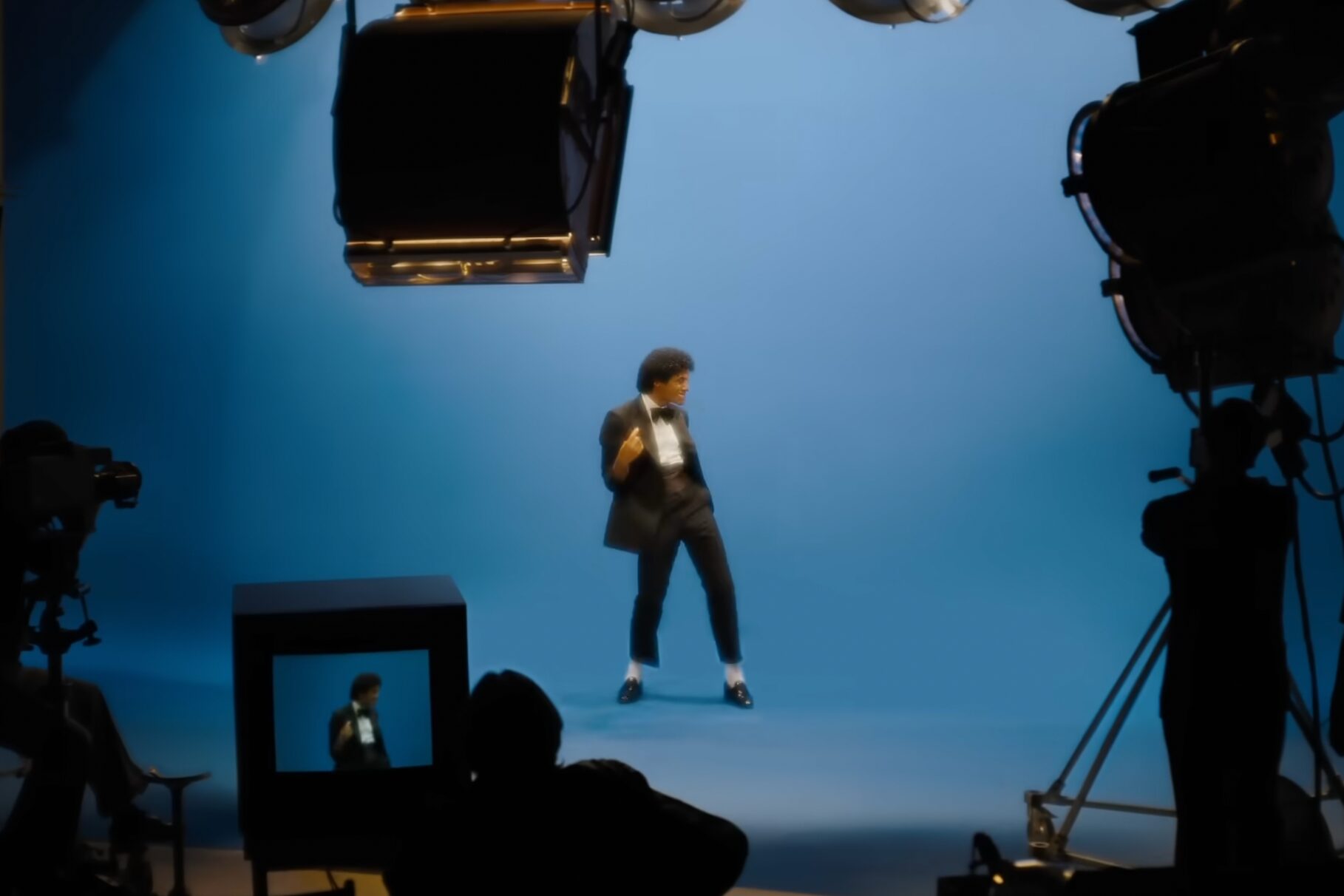
The film also treats Jackson’s artistic evolution as incidental. We see Off the Wall, Thriller, Bad, Dangerous—but never the creative process. Where are the studio sessions? The arguments with Quincy Jones? The late-night writing sprees? These moments aren’t just trivia; they’re the engine of artistry.
Without them, Jackson becomes a performer, not a creator.
It Relies on De-Aging Tech Instead of Emotional Truth
The heavy use of de-aging technology to show Jackson at various life stages is technically impressive, but emotionally hollow. Watching a digitally smoothed face deliver lines written by committee doesn’t create connection—it creates distance.
In The Irishman, de-aging was used to reflect the weight of time, regret, and erasure. Age wasn’t just a visual detail—it was a theme. In the Jackson movie, it’s a gimmick. We see young Michael dancing with supernatural precision, but we don’t feel his hunger, his fear, his exhaustion.
Worse, the film casts adult actors to play child Jackson in non-performance scenes. This decision is jarring. The disconnect between voice, mannerism, and appearance undercuts any emotional authenticity. It’s not suspension of disbelief—it’s disbelief forced upon the audience.
And when the real archival footage appears, the contrast is devastating. The real young Michael had fire, vulnerability, and a terrifying maturity. The actor imitation lacks soul.
The Supporting Characters Are Caricatures
In any biopic, the people around the protagonist reflect different facets of their identity. In the Jackson movie, supporting figures are reduced to archetypes:
- Joe Jackson – the tyrant, with zero nuance
- Katherine Jackson – the silent saint
- Elizabeth Taylor – the eccentric ally, shown only in glamorous cameos
- Brooke Shields – the childhood friend, reduced to a single nostalgic scene
- Katherine Heigl as Nurse Debbie Rowe – a character with real emotional complexity, flattened into a weepy footnote
There’s no exploration of how Jackson’s relationships shaped him. His bond with his brothers? Exploited for one awkward reunion scene. His connection with children? Treated as pure innocence, never interrogated. His reliance on staff and handlers? Ignored.
Even the Jackson family’s famous dysfunction—so central to his psychology—is reduced to a few muttered lines. The film acts as if protecting Jackson’s image means erasing everyone else’s perspective.
That’s not storytelling. It’s censorship.
It Treats Trauma as Backdrop, Not Substance
The film includes fleeting references to Jackson’s abuse by his father, his chronic pain, his insomnia, and his dependency on medication. But these aren’t explored—they’re name-dropped, then dropped.
For instance, we see Jackson popping pills, but never the why. Is it pain? Anxiety? Insomnia? Addiction? The film doesn’t care. It treats his drug use like wardrobe—something that happens off-screen and reappears when convenient.
Compare this to The Whale, where every bodily function, every craving, is part of a larger emotional arc. Or Crazy Heart, where alcoholism isn’t a footnote but the engine of the character’s downfall and redemption.
The Jackson movie wants us to sympathize with his suffering, but refuses to show its roots. That’s manipulation, not empathy.
The Music Is Used as Decoration, Not Narrative

Jackson’s music was revolutionary. It carried narrative, emotion, social commentary, and personal confession. Yet in the film, songs are deployed like mood lighting—dropped into scenes to cue emotion rather than reveal character.
“Billie Jean” isn’t presented as a response to paternity claims or racial paranoia—it’s just a cool dance number. “Black or White” appears without context of its global cultural impact. “They Don’t Care About Us” is nowhere to be found, despite its direct commentary on persecution and injustice.
Even “Man in the Mirror,” a song about personal change, is used in a montage of Jackson hugging fans—ironic, given the film’s refusal to let him confront his own flaws.
When music becomes wallpaper, the biopic loses its soul. Jackson’s artistry wasn’t just performance—it was testimony. The film ignores this.
The Estate’s Control Killed Creative Risk
It’s an open secret that the Jackson estate approved and likely influenced the film’s direction. While estate involvement isn’t inherently bad—see the cooperation in Elton John’s Rocketman—the difference is intent.
Rocketman didn’t shy from Elton’s drug binges, sexuality, or emotional isolation. It used fantasy sequences to express inner turmoil. It was bold, messy, and human.
The Jackson movie, by contrast, feels sanitized. Every controversial edge is sanded down. Any scene that might provoke debate is avoided. The result? A film that’s safe, sterile, and ultimately forgettable.
Art requires risk. Legacy preservation does not. This movie chose the latter.
What a Better Biopic Would Have Done
A truthful Michael Jackson biopic wouldn’t have to condemn or defend him. It could have done what the best films do: present contradictions and let the audience wrestle with them.
Imagine a film that: - Opens with the 1993 allegations and uses them as a narrative thread - Explores his artistic genius alongside his emotional stunting - Shows the making of Thriller as both triumph and pressure cooker - Depicts his relationships with children not as proof of guilt or innocence, but as part of his arrested development - Ends not with his death, but with a quiet scene—Jackson alone, listening to a childhood recording, wondering who he really is
That film would be uncomfortable. It would spark debate. It might even alienate fans. But it would be honest.
Instead, we got a greatest-hits package with a thin storyline stretched over it.
Conclusion: Biopics Owe Truth, Not Tribute
The basic duty of a biopic is not to glorify. It’s to illuminate.
The Michael Jackson movie fails that duty by evading hard questions, distorting chronology, silencing dissenting voices, and prioritizing image over insight. It mistakes admiration for understanding.
We don’t need another tribute. We need a reckoning. Until a filmmaker has the courage to deliver that, Jackson’s story will remain half-told—reduced to dance moves, sequins, and denial.
For now, the most honest thing we can say about the film is this: it dances beautifully around the truth.
FAQ
What should you look for in The Michael Jackson Movie Misses the Mark on Biopic Basics? Focus on relevance, practical value, and how well the solution matches real user intent.
Is The Michael Jackson Movie Misses the Mark on Biopic Basics suitable for beginners? That depends on the workflow, but a clear step-by-step approach usually makes it easier to start.
How do you compare options around The Michael Jackson Movie Misses the Mark on Biopic Basics? Compare features, trust signals, limitations, pricing, and ease of implementation.
What mistakes should you avoid? Avoid generic choices, weak validation, and decisions based only on marketing claims.
What is the next best step? Shortlist the most relevant options, validate them quickly, and refine from real-world results.